









By the numbers: Luohu reports five years of transformation


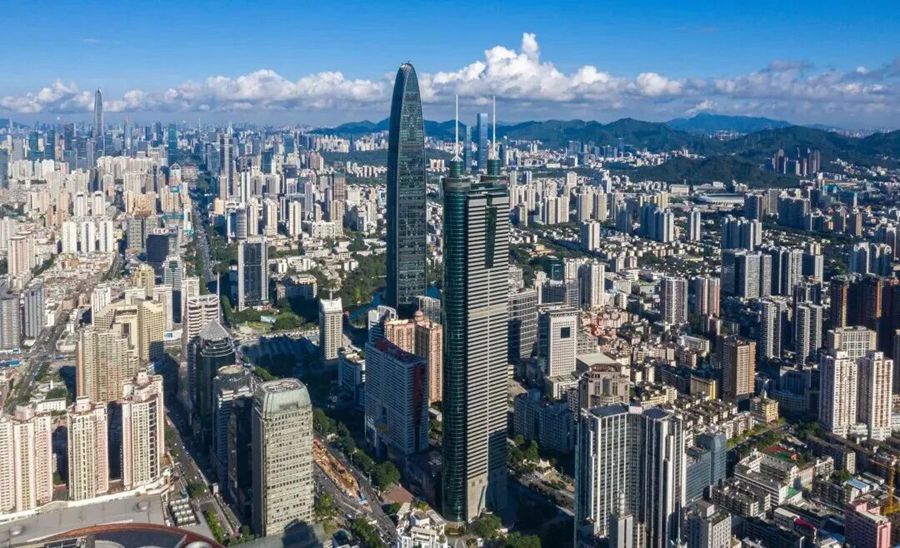
A bird’s-eye view of part of Luohu. Luohu District has reported significant progress over the past five years, citing data showing advances in industrial upgrading, urban renewal, connectivity with Hong Kong, public services and governance. File photo
Luohu District has reported significant progress over the past five years, citing data showing advances in industrial upgrading, urban renewal, connectivity with Hong Kong, public services and governance.
The figures reflect a shift from growth driven primarily by expansion to a development model focused on unlocking existing potential and cultivating multiple sources of economic momentum.
Industrial upgrading gathers pace
Luohu is now home to more than 100 licensed financial institutions. Shenzhen’s first pilot zone for digital renminbi applications and innovation was also launched and began operations in the district. The district also added four new commercial enterprises with annual revenues exceeding 1 billion yuan.
Revenue from Luohu’s gold and jewelry industry surpassed 200 billion yuan, doubling over the five-year period. Its process design and intelligent manufacturing cluster was recognized as a national characteristic industry cluster for small and medium-sized enterprises.
The added value of strategic emerging industries rose to more than 10% of the district’s GDP, while revenue from software and information technology services companies above the designated size doubled.
Luohu established 20 industrial funds with a combined scale of approximately 53.3 billion yuan. The number of innovation platforms above the municipal level reached 114, an increase of 30%, while the district’s pool of high-level talent exceeded 1,000, quadrupling over five years.
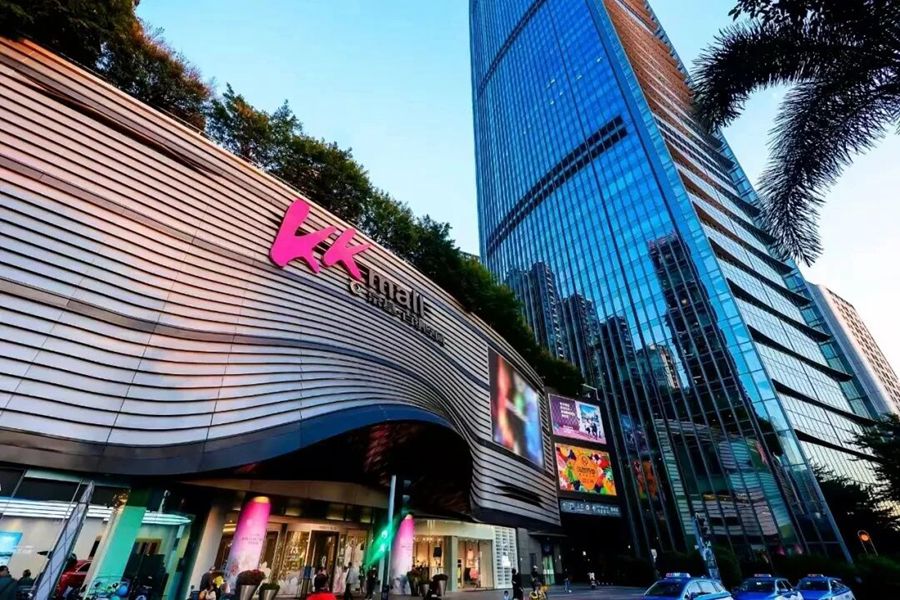
A shopping area in Luohu. File photo
A total of 1,116 key enterprises were established, bringing the number of enterprises above designated size and key financial enterprises to more than 4,000. The number of high-tech SMEs exceeded 800, while specialized and sophisticated SMEs surpassed 400 — both figures doubled during the period.
Luohu is also home to 18 “little giant” enterprises, including six key “little giants,” as well as 31 newly cultivated gazelle companies and 12 potential unicorn or seed unicorn companies.
More space for development
The district prepared and placed more than 2 million square meters of land into reserve and released over 1 million square meters of high-quality industrial space, helping to ease a longstanding shortage of development land.
The Sungang-Qingshuihe area has undergone visible transformation. Luohu established a spatial structure featuring “one axis, two belts and three clusters,” with 30 themed buildings, including Runhong Aerospace Technology Tower and Yunqi International Fintech Center.
Stronger Shenzhen-Hong Kong links
Passenger traffic through Luohu’s three major checkpoints increased steadily and exceeded 100 million in 2025. The number of tax-refund shops for departing tourists rose to 522, while the district’s total foreign trade import and export volume more than doubled.
Luohu’s Asia-Pacific SME Cooperation Zone was designated a national-level China-foreign SME cooperation zone. The “Luohu-Hong Kong Culture Month” has also been held successfully for three consecutive years.
Urban renewal and improved infrastructure
Nearly 5 million square meters of renovation and redevelopment projects were completed over the past five years. The Chunfeng Tunnel opened to traffic, while three Metro lines, including Line 14, began operations.
More than 80 kilometers of water supply and drainage pipelines were newly built or upgraded. Nearly 1,000 residential communities underwent improvements involving drinking water quality, secondary water supply facilities and waste-sorting infrastructure.
A total of 424 elevators were added to existing residential buildings, while 1,488 older elevators were replaced.
Greater investment in public services
Luohu’s education spending exceeded 30 billion yuan over the five-year period. The district added or expanded 70 schools and kindergartens, creating 55,000 new public education places.
It was recognized as a national model for high-quality and balanced compulsory education and for the provision of universal preschool education.
Smarter governance and stronger safety measures
Luohu’s Smart City Management system reduced the average response time to incidents to 12 minutes. Its Smart Enterprise Services platform provided policy support to more than 45,000 businesses.
Party organizations now cover all 818 residential communities in the district. Luohu was named among China’s Top 100 Reform Cases for five consecutive years and received the “Ping An Ding” award for safe development in Guangdong.
 粤公网安备 44030302000492号